For decades, the social contract between Google and digital publishers was straightforward: Allow us to index your content, and we will return the favor with referral web traffic.
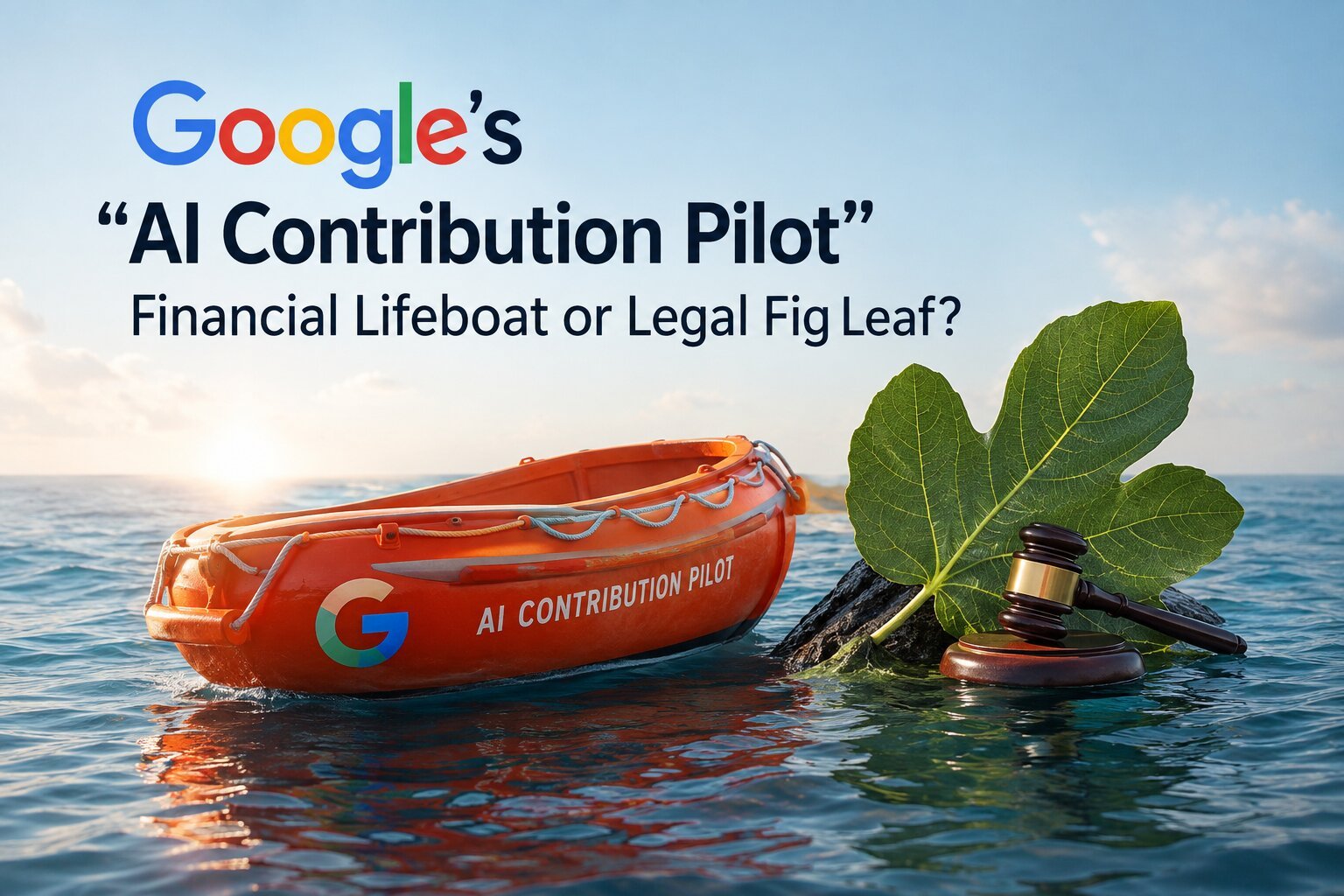
With the rapid expansion of AI Overviews, AI Mode, and standalone conversational surfaces like Gemini, that contract is dissolving. Generative AI delivers synthesis directly on the search page, keeping users inside Google’s ecosystem and squeezing referral clicks. To address mounting friction, Google has quietly expanded its invite-only “AI Contribution Pilot”—a program that pays web publishers directly through Google Search Console when their work shapes AI-generated answers.
While Google frames this as a proactive step toward rewarding high-quality journalism, media critics and executives view it as a calculated attempt to soften regulatory pressure and establish low-cost licensing precedents.
Table of Contents
ToggleBehind the Dashboard: Technical Mechanics & Payment Thresholds
The AI Contribution Pilot represents a distinct departure from Google’s historical licensing arrangements, which were typically massive, flat-rate deals negotiated behind closed doors with elite news organizations like News Corp or Reddit.
-
Inference vs. Grounding: Payments trigger strictly during the generation phase—when a site’s text directly shapes the synthesis of an AI answer. Post-generation citation links, where content is merely referenced to verify a pre-written statement, do not qualify for payouts.
-
Value-Based Valuation: Rather than relying on raw impression metrics or simple citation counts, Google uses a proprietary metric to judge how “significantly” a page influenced the output.
-
Integrated Workflow: Invited webmasters manage payouts, bank details, and program agreements directly through an AI Earnings Panel inside Google Search Console, making participation virtually frictionless.
-
Surfaces Covered: Payout calculations aggregate usage across Gemini, AI Overviews, and experimental AI search engines.
Industry Sentiment: “Peanuts” vs. Early Positioning
Early feedback from publishing executives—reported by Digiday and covered across search trade outlets like Search Engine Journal and Search Engine Roundtable—paints a complex picture:
| Factor | Strategic Reality |
| Publisher Adoption | Dozens of small-to-midsize digital outlets have been invited, expanding far beyond legacy news sites. |
| Financial Yield | Multiple participating executives describe monthly payouts as “peanuts” compared to historic display ad revenue. |
| Transparency | The calculations remain opaque; publishers see monthly lump sums without detailed content-level attributions. |
| Risk Mitigation | Media analysts note the pilot helps Google reduce reputational and copyright risk by creating an opt-in licensing defense. |
Despite minimal early earnings, many digital media leads argue that participating is a necessary strategic move:
“Do I wish they were more transparent? Definitely. But I’m hopeful that the fact that they’re setting a precedent for exploring paying publishers directly for content through this is meaningful.”
— Participating Publishing Executive (via Digiday)
Strategic Takeaways for Content Teams
For digital publishers navigating this transitional era, several tactical steps stand out:
-
Focus on Deep Originality: Because Google values content that supplies “freshness and factuality” to AI models, high-density, original reporting stands the highest chance of receiving payment.
-
Treat Search Console as a Marketplace Signal: View Search Console not just as a traffic report, but as a emerging feedback loop for how language models consume your niche data.
-
Weigh Collective Leverage vs. Micro-Payouts: Joining micro-licensing pilots can provide small revenue streams, but publishers should remain aware that accepting baseline terms may limit future bargaining leverage in broader copyright negotiations.