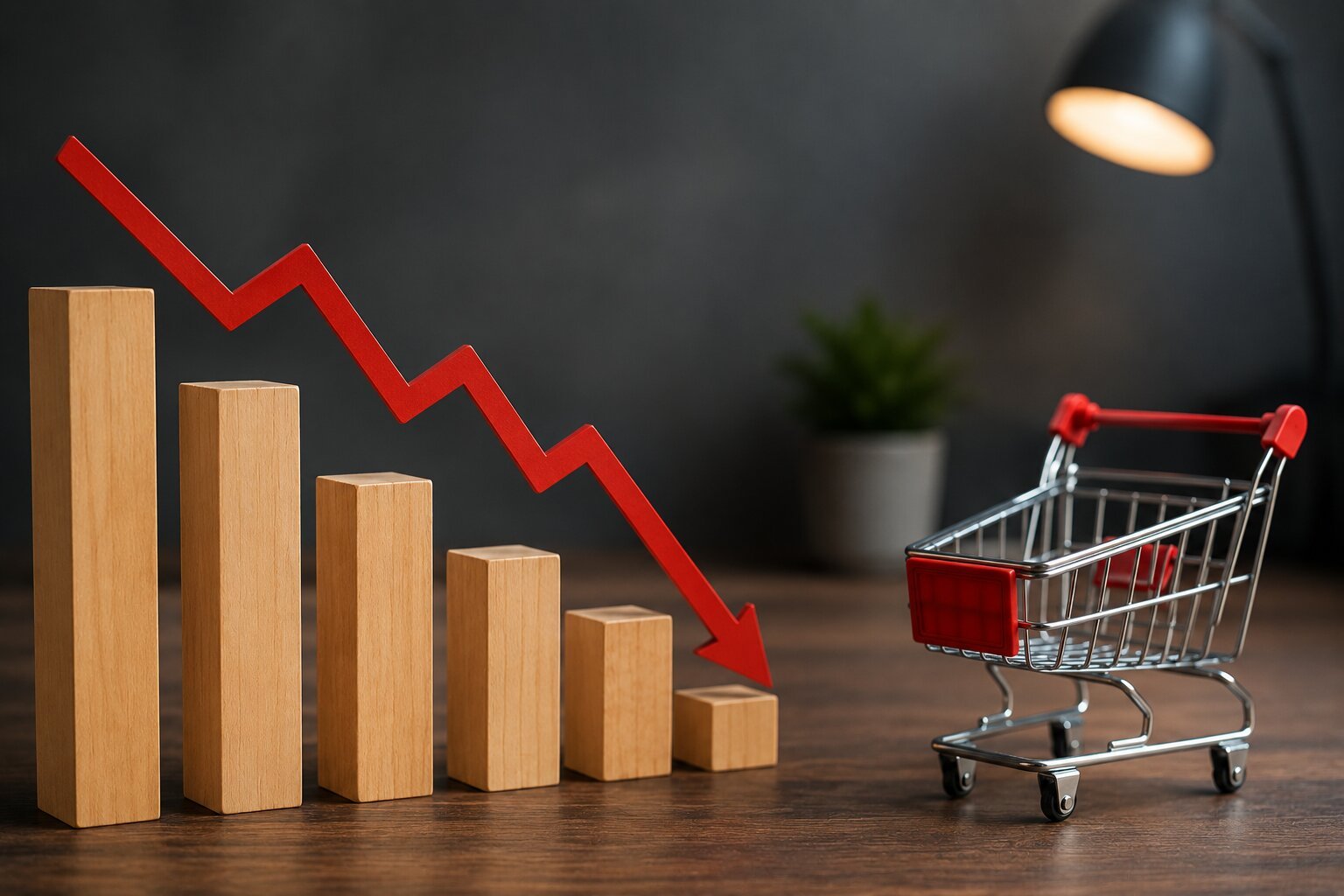
If you’re asking yourself this question right now, you already know the stress that comes with it. The quiet dread of opening your sales report. The growing sense that competitors are somehow pulling ahead. The rising cost of rent, inventory, and staff in Pakistan’s current economy — all while revenue moves in the wrong direction. And underneath it all, the fear every business owner knows but rarely says out loud: what if this doesn’t turn around?
Here’s what we want you to know before anything else: declining sales rarely mean you have a bad business. In the vast majority of cases we see, it means something else entirely — something fixable.
In this guide, we’ll uncover the hidden reasons your sales are dropping and show you practical steps to turn things around.
Don’t let declining sales become your new normal. Let’s start by understanding exactly what’s happening.
Table of Contents
Toggle12 Reasons Your Sales Are Dropping Every Month
1. Your Business Isn’t Visible Online
If customers can’t find you when they search, they can’t buy from you — no matter how good your product is. Invisibility is often the very first domino to fall.
2. Competitors Are Outranking You on Google
Every day a competitor outranks you on Google Search or Maps, they capture customers who were looking for exactly what you sell — customers who never even knew you existed.
3. You’re Relying Only on Word-of-Mouth
Word-of-mouth is valuable, but it doesn’t scale on its own, and it doesn’t reach the growing number of customers who search online before ever asking a friend for a recommendation.
4. Your Google Business Profile Is Poorly Optimized
An incomplete, outdated, or unverified profile actively pushes potential customers toward competitors with more complete, trustworthy-looking listings.
5. Your Website Isn’t Converting Visitors
Traffic without conversions is a leaky bucket. If your website is slow, confusing, or missing a clear call-to-action, visitors leave without ever contacting you.
6. You’re Targeting the Wrong Audience
Sometimes the issue isn’t visibility at all — it’s that your marketing, content, or product positioning is reaching people who were never likely to buy in the first place.
7. Customer Experience Has Declined
Sometimes gradually, sometimes without anyone noticing internally — service delays, staff turnover, or inconsistent quality can quietly erode the experience that once brought customers back.
8. You’re Ignoring Repeat Customers
Acquiring a new customer typically costs far more than keeping an existing one. If you’re not nurturing repeat business, you’re leaving consistent, low-cost revenue on the table.
9. Your Competitors Have a Stronger Online Presence
More reviews, better photos, a more active Google Business Profile, more content — cumulatively, this builds more trust, and trust is what converts searchers into customers.
10. You’re Not Tracking Marketing Performance
Without tracking, you can’t tell what’s actually working and what’s quietly wasting your time and budget — meaning problems can go unnoticed for months.
11. Consumer Behavior Has Changed
More customers than ever research, compare, and read reviews online before making a purchase or visiting a business — even for everyday, local purchases.
12. You’re Treating Marketing as an Expense Instead of an Investment
When budgets tighten, marketing is often the first thing cut — but this is frequently when visibility (and sales) begin to quietly decline.
The Warning Signs Most Business Owners Ignore
Declining sales rarely appear out of nowhere. Usually, there are earlier signals — but they’re easy to dismiss as “a slow month.” Watch for:
- Fewer phone calls than usual.
- Declining website traffic month over month.
- Reduced walk-in customers.
- Lower WhatsApp inquiries.
- Increased customer complaints.
- Falling conversion rates (more visitors, fewer sales).
- More customers mentioning competitors by name.
If several of these sound familiar, the decline likely started well before you noticed it in your sales numbers.
What Most Business Owners Miss
When sales drop, most business owners instinctively look inward — at their products, their pricing, their staff, their discounts. These matter, of course. But they’re often not the real issue.
What tends to go overlooked is everything happening outside the shop or office:
- Google visibility
- Local SEO
- Online reputation
- Customer retention
- Conversion optimization
- Overall digital presence
Here’s the core truth worth sitting with:
“Your customers haven’t disappeared — they’ve simply found businesses that are easier to discover online.”
They’re still searching, still buying, still spending. They’re just spending it somewhere your business hasn’t made itself easy to find.
How to Increase Sales Again (Step-by-Step)
Step 1: Audit Your Online Presence
Search for your own business the way a customer would. Check Google, Google Maps, and your website. Note everything that’s missing, outdated, or inconsistent.
Step 2: Optimize Your Google Business Profile
Complete every section — hours, categories, photos, description — and keep your information accurate and current.
Step 3: Improve Your Website
Make sure it’s fast, mobile-friendly, and has a clear, obvious way for visitors to contact or buy from you.
Step 4: Invest in Local SEO
Strengthen your visibility for the specific searches your local customers are already using to find businesses like yours.
Step 5: Collect Customer Reviews
Make asking for reviews part of your regular process after every sale or service — genuine reviews build the trust that converts new visitors.
Step 6: Track Leads and Conversions
Know exactly where your calls, messages, and sales are coming from, so you can double down on what’s working.
Step 7: Create Helpful Content
Answer the questions your customers are already asking — through blog posts, social captions, or FAQs — to build trust and visibility simultaneously.
Step 8: Focus on Repeat Customers
Stay in touch with past customers through WhatsApp, SMS, or email, and give them reasons to return.
Step 9: Optimize for Google Maps
Ensure your business appears prominently when nearby customers search for what you offer — this is often the single highest-impact fix available.
Step 10: Monitor Competitors
Regularly check what competitors are doing well — their reviews, their offers, their online presence — and identify the gaps you can close.
Contact SEO Digix for a free business visibility audit and get a clear picture of exactly which of these steps will move your numbers fastest.
Industry-Specific Challenges
Declining sales look different depending on your industry, but the underlying causes are often strikingly similar:
- Restaurants losing foot traffic to competitors with stronger Google Maps visibility and more reviews.
- Clinics losing patients who now search and compare online before booking an appointment.
- Law firms receiving fewer inquiries as more clients research and shortlist online before ever calling.
- Salons experiencing fewer bookings due to weak online presence and limited reviews.
- Real estate businesses losing leads to competitors with more visible, active listings and profiles.
- E-commerce stores experiencing fewer orders due to declining organic visibility and website conversion issues.
The Cost of Ignoring Declining Sales
It’s tempting to wait and see if things “pick back up.” But declining sales, left unaddressed, tend to compound rather than resolve on their own. The real costs include:
- Lost revenue that continues to fall, month after month.
- Staff reductions, as shrinking revenue forces difficult decisions.
- Reduced market share, as competitors capture the customers you’re losing.
- Business closures — the outcome no owner wants to face, but one that becomes more likely the longer the root cause goes unaddressed.
- Increased stress and burnout, as owners work harder for diminishing results.
The earlier the underlying cause is identified, the less costly — and less stressful — the fix tends to be.
A Real-Life Scenario
Consider a furniture store in Karachi that saw a 35% decline in sales over six months, despite no real change in product quality or pricing. On closer inspection, the issue wasn’t the products — it was visibility. The store’s Google Business Profile was incomplete, had almost no reviews, and rarely appeared in local searches.
After improving its Google Business Profile, actively collecting reviews, and investing in Local SEO, the store began receiving more calls and walk-in customers within weeks — without any change to the products themselves.
This kind of scenario is far more common than most business owners realize, and it’s exactly the pattern Local SEO and visibility work is designed to reverse.
Frequently Asked Questions
1. Why are my sales dropping even though I have good products?
Good products alone don’t guarantee visibility. If customers can’t find you online — through Google, Maps, or reviews — they’ll choose a competitor who’s easier to discover, regardless of product quality.
2. How can I increase sales quickly?
Start with the fastest-impact fixes: complete and optimize your Google Business Profile, actively collect reviews, and ensure your contact information is accurate and consistent everywhere online.
3. Does SEO help increase revenue?
Yes. SEO increases the number of relevant people who find your business online, which directly increases inquiries, calls, and — ultimately — sales.
4. Why are my competitors growing faster?
In many cases, it comes down to a stronger online presence: better Google visibility, more reviews, a more optimized website, and more consistent digital marketing efforts.
5. How important is Google Business Profile?
Extremely important — for most local businesses, it’s the first thing potential customers see, and often determines whether they choose you or a competitor.
6. Can Local SEO help small businesses?
Yes, often significantly. Local SEO is specifically designed to connect nearby customers with relevant local businesses, making it especially effective for small and mid-sized businesses.
7. How long does it take to see SEO results?
Initial improvements are often visible within 4–8 weeks, with stronger, more established results typically building over 3–6 months of consistent effort.
8. Can SEO Digix help improve my sales?
Yes. SEO Digix helps Pakistani businesses across industries identify exactly why they’re losing customers online, then fixes it — through Local SEO, Google Business Profile optimization, and conversion-focused digital marketing.
Ready to Turn Things Around?
Declining sales are stressful, but they’re rarely a sign that your business — or your effort — isn’t good enough. In most cases, the real issue is visibility: customers who are searching for exactly what you offer, but finding someone else first.
Let’s identify what’s costing your business customers and revenue. SEO Digix specializes in helping Pakistani business owners:
- Uncover the specific reasons behind declining sales
- Get fully optimized and visible on Google Search and Maps
- Build trust through genuine customer reviews
- Convert more website visitors into real leads and sales
Get in touch with SEO Digix today and start growing again. Your customers are still out there searching — let’s make sure they find you first.