Quick Answer
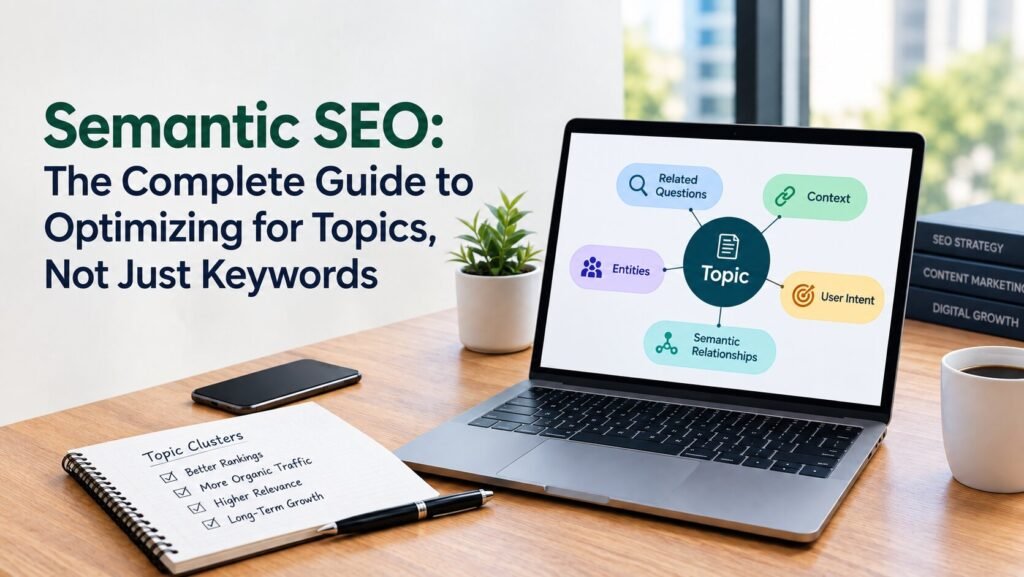
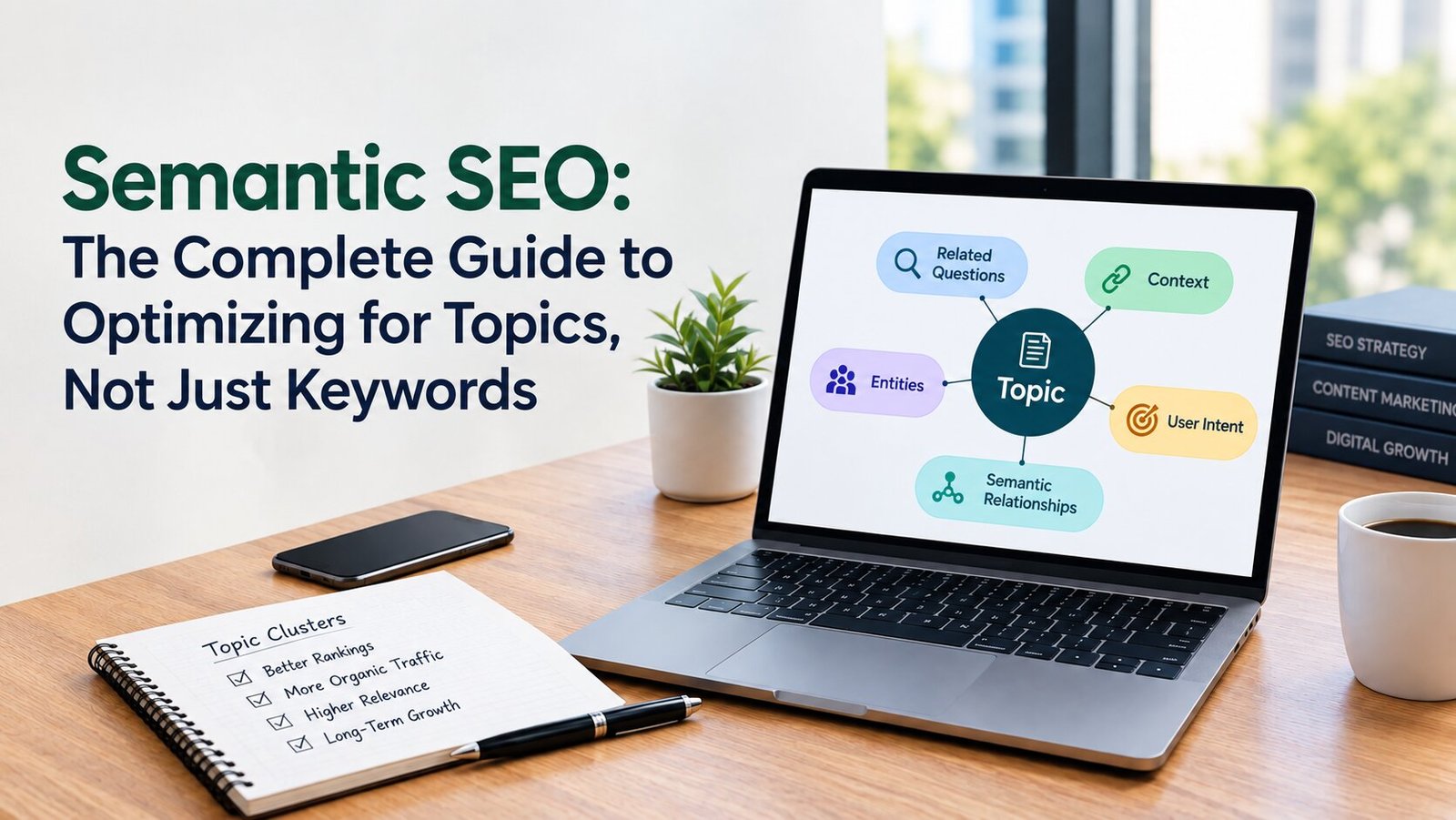
Semantic SEO is the practice of building content around a full topic and the entities inside it — not a single keyword. Instead of repeating one phrase across a page, you map every real question a searcher has about a subject, connect it to related people, places, and concepts (called entities), and structure your content so both search engines and AI tools can extract clear, direct answers. The payoff: better rankings on Google, and a real shot at being the source an AI Overview or a ChatGPT answer actually cites.
Search Stopped Being a Matching Game
Type a search into Google today and it rarely just matches your words to a page full of the same words. It tries to figure out what you actually want, then decides which pages genuinely answer that — sometimes writing the answer itself, right at the top of the page, before you’ve clicked anything.
That shift is semantic search, and it’s been building for over a decade. What’s new is how much it now matters. AI Overviews, ChatGPT, Perplexity, and Gemini don’t rank ten blue links anymore — they read across many pages, decide which ones are trustworthy and clear, and stitch an answer together, often citing two or three sources by name.
If your content is still built around repeating one exact phrase, you’re optimizing for a search engine that increasingly doesn’t work that way anymore. This guide covers what to do instead.
Keyword SEO vs. Semantic SEO
The clearest way to understand semantic SEO is to see it next to what it replaced.
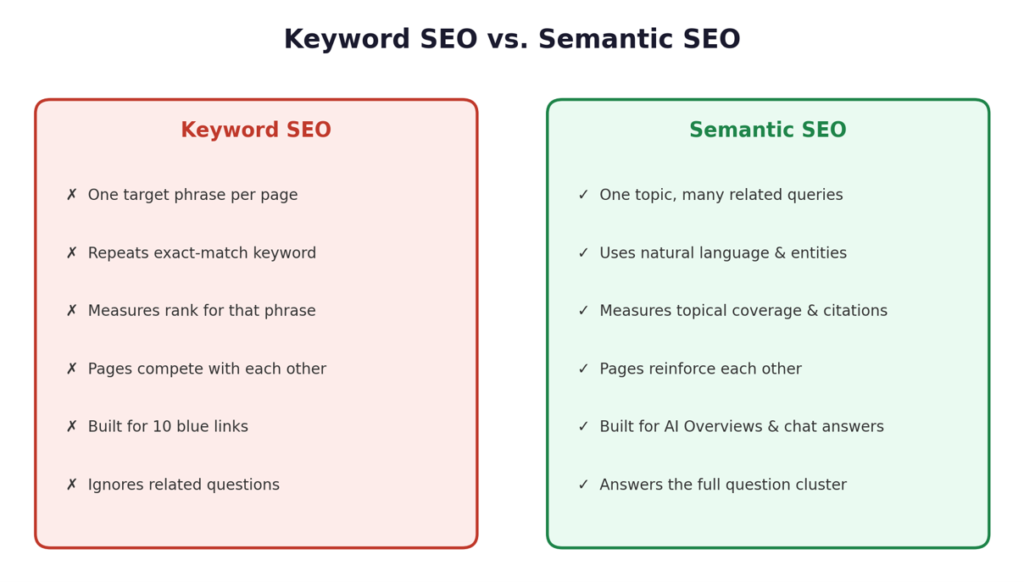
Figure 1 — The core shift: from matching one phrase to covering one topic.
Keyword SEO treats each page like a container for one target phrase. Semantic SEO treats each page like an answer to a real question — one that happens to sit inside a bigger topic, connected to other related questions your audience also has.
What Are Entities, and Why Do They Matter So Much?
An entity is any specific, nameable thing — a person, a place, a brand, a concept. “Dubai,” “Apple Inc.,” and “vitamin D deficiency” are all entities. Search engines don’t just read your words; they try to identify which entities you’re talking about and how those entities relate to each other.
This is how Google tells the difference between an ambiguous word used two completely different ways.
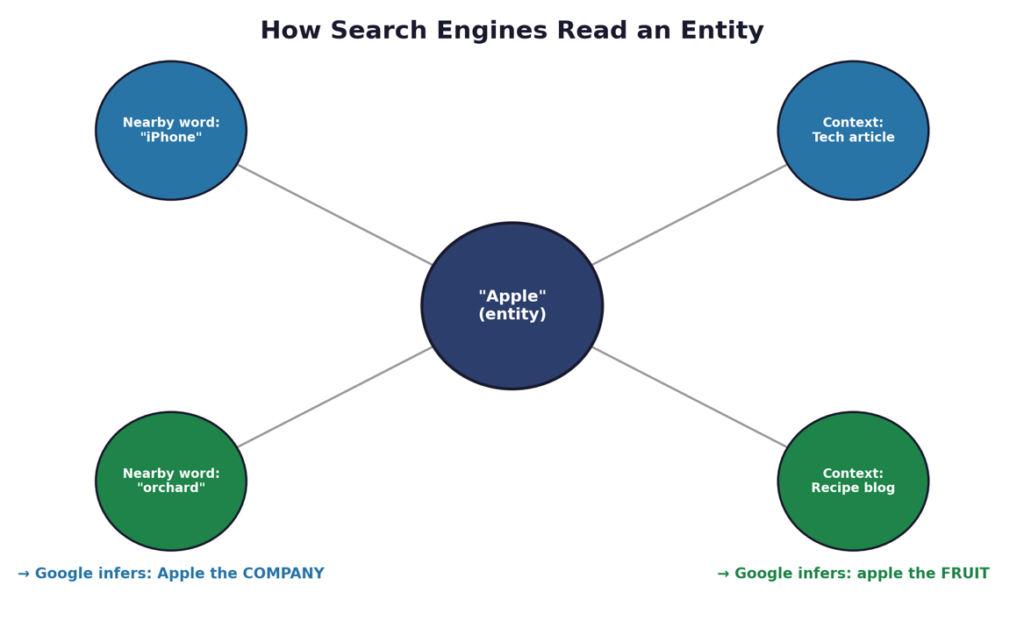
Figure 2 — The same word, disambiguated by the entities around it.
This matters practically because vague writing hides your entities. A page that keeps saying “the company” or “this treatment” instead of naming the actual entity gives search engines less to work with — and gives an AI system less confidence to cite you as a clear source.
The Pillar-and-Cluster Model
Once you’re thinking in topics instead of keywords, you need a way to actually organize that on your website. The most reliable structure is the pillar-and-cluster model: one broad “pillar” page covering a topic at a high level, surrounded by narrower “cluster” pages that each go deep on one specific sub-question.
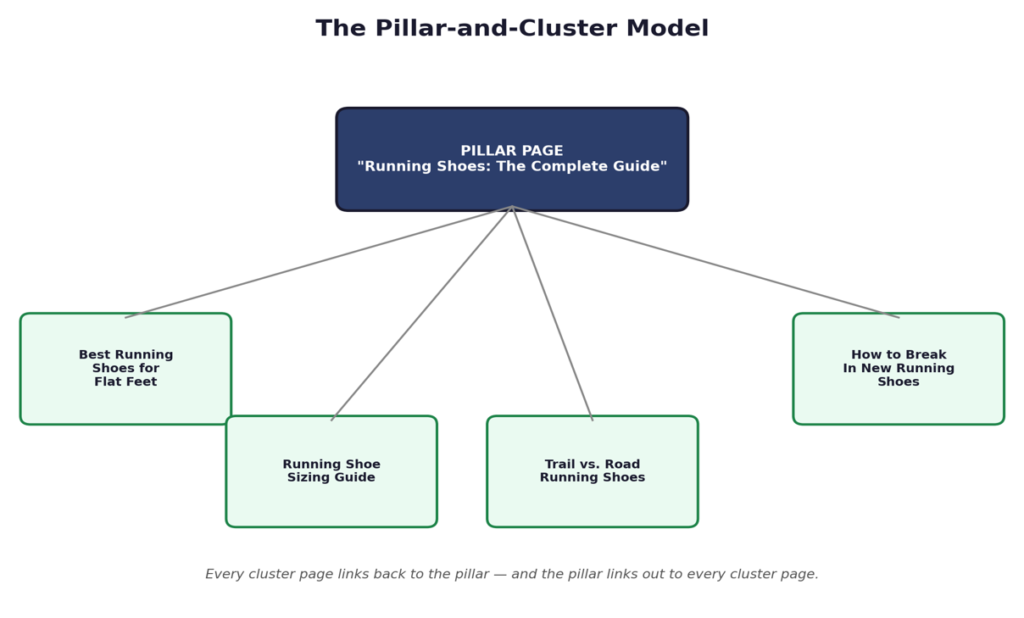
Figure 3 — A pillar page and its supporting cluster pages, fully interlinked.
The linking is what makes this work. Every cluster page links back to the pillar. The pillar links out to every cluster page. That two-way linking tells search engines these pages are all part of one coherent topic — which builds what’s often called topical authority.
The 5-Stage Framework for Implementing Semantic SEO
Here’s a practical sequence for turning any topic into a semantically optimized content set.
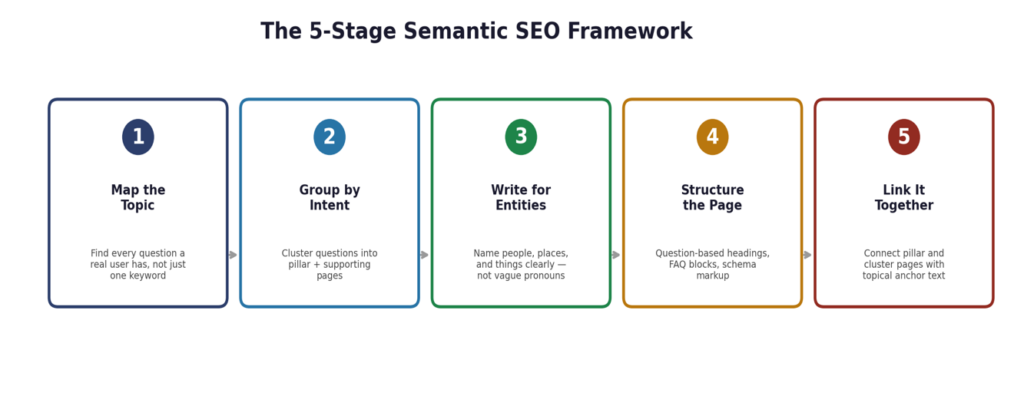
Figure 4 — Five stages, applied to any topic your business covers.
Stage 1: Map the Topic
Start broader than a keyword list. Pull every real question people ask about the topic — Google’s “People also ask” box, Reddit threads, your own customer support tickets, and direct competitor content are all good sources. You’re building a map of the whole topic, not a list of phrases.
Stage 2: Group by Intent
Sort your question map into groups. Some questions are broad and introductory — those become your pillar page. Others are narrow and specific — those become individual cluster pages. A question about “is running bad for your knees” is a different intent than “best running shoes for bad knees,” even though they’re related.
Stage 3: Write for Entities
Name things directly. Instead of “this condition can be treated several ways,” write “plantar fasciitis can be treated with stretching, orthotic inserts, or in severe cases, surgery.” Specific, named entities are what let a search engine — or an AI model — confidently connect your content to a searcher’s actual query.
Stage 4: Structure the Page for Extraction
AI tools and featured snippets both favor content that’s easy to lift a direct answer from. Use question-based subheadings. Put the actual answer in the first sentence or two beneath each heading, then expand with detail. Add a genuine FAQ section with real answers, not just schema markup with nothing behind it — Google’s own data shows unanswered FAQ schema does essentially nothing for AI citation.
Stage 5: Link It Together
Connect your pillar and cluster pages with descriptive, topic-relevant anchor text — not “click here.” This reinforces the topical relationship for search engines and helps readers actually navigate between related content, which keeps them engaged with your site rather than bouncing back to search.
A Semantic SEO Content Checklist
☐ Page covers a full topic, not just one exact-match phrase
☐ At least one heading is phrased as a direct question
☐ The answer appears within the first 1–2 sentences under each heading
☐ Key entities (people, places, brands, concepts) are named explicitly, not left vague
☐ A genuine FAQ section exists with real, complete answers
☐ Page links to at least one related pillar or cluster page with descriptive anchor text
☐ Meta title and description clearly and specifically describe the page’s actual content
☐ Structured data (schema) matches what’s visibly on the page — nothing invisible or misleading
Where This Actually Moves the Needle
| SEO Element | Keyword SEO Approach | Semantic SEO Approach |
| Page focus | One exact-match phrase | One topic, many related questions |
| Headings | Generic statements | Direct, question-based phrasing |
| Internal linking | Sparse, keyword-anchor only | Dense, topic-based pillar/cluster links |
| FAQ sections | Often schema-only, no visible answers | Real, visible questions and answers |
| Success metric | Rank position for one phrase | Topical coverage + AI citation rate |
Common Mistakes That Undercut Semantic SEO
- Writing one page per keyword variation, instead of one strong page per topic — this just recreates keyword stuffing with extra steps.
- Adding FAQ schema markup with no real, visible answers on the page — this does not help AI citation, since models read visible text, not invisible metadata.
- Vague pronoun-heavy writing that never names the actual entity being discussed.
- Pillar pages with no links out to cluster content, or cluster pages that never link back — breaking the topical signal entirely.
- Chasing every possible long-tail phrase instead of genuinely answering the handful of questions that matter most to real users.
Frequently Asked Questions
What is semantic SEO in simple terms?
Semantic SEO means optimizing content around a full topic and its related concepts, rather than repeating one exact keyword phrase — helping search engines and AI tools understand what you’re actually covering.
Is semantic SEO different from traditional SEO?
It’s an evolution, not a replacement. Traditional on-page basics (titles, headings, site speed) still matter — semantic SEO adds a layer focused on topical depth, entities, and structure built for both classic search and AI-generated answers.
What is an entity in SEO?
An entity is any specific, nameable thing — a person, place, brand, or concept — that search engines can identify and connect to related entities, helping them understand meaning beyond literal keyword matching.
Do I need to abandon keyword research entirely?
No. Keyword research still identifies what people search for — semantic SEO simply organizes those keywords around topics and intent, rather than treating each one as an isolated target.
Does FAQ schema markup help AI Overviews cite my page?
Only if the FAQ has real, visible answers on the page. Schema markup with no genuine text behind it provides little to no benefit for AI citation.
What’s the difference between a pillar page and a cluster page?
A pillar page covers a topic broadly; cluster pages go deep on specific sub-questions within that topic. They link to each other, reinforcing the topical relationship for search engines.
How long should semantically-optimized content be?
As long as it needs to be to fully answer the question — no longer. A thorough 600-word answer beats a padded 2,000-word one; length should follow genuine depth, not a target word count.
Does semantic SEO help with voice search?
Yes. Voice queries tend to be conversational, full questions — exactly the format semantic SEO’s question-based structure is built to answer directly.
How do I find the right entities to include in my content?
Research how authoritative sources in your topic area name and describe things specifically, and make sure your own content names those same people, places, and concepts explicitly rather than referring to them vaguely.
Can small websites compete using semantic SEO?
Often yes, more easily than with pure keyword competition — a smaller site that thoroughly covers a specific topic cluster can out-perform a larger site that only covers it superficially.
The Bottom Line
Semantic SEO isn’t a trick or a checklist item — it’s writing the way a genuinely knowledgeable person would explain a topic to someone who asked. Cover the real questions. Name the real things. Connect the related pieces. Structure it so the answer is easy to find.
Do that consistently, and you’re not just optimizing for today’s Google — you’re building the kind of content that AI systems trust enough to cite, and that real readers trust enough to come back to.